
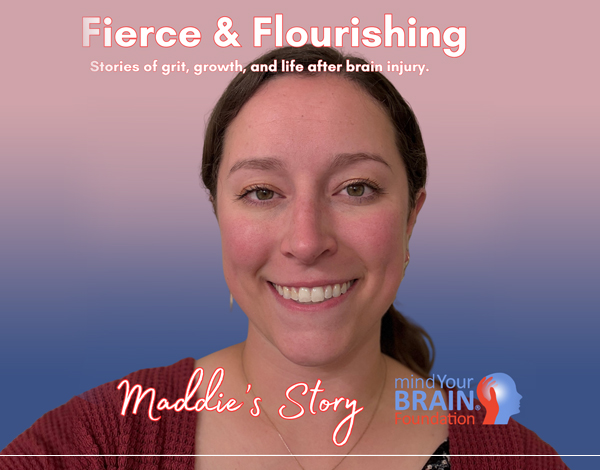
Maddie
Returning to work after a brain injury means learning to navigate a body and brain that no longer function the way they once did. It requires patience, resilience, creativity, and the courage to keep moving forward even when the path feels uncertain.
For Maddie, that journey has been defined by remarkable perseverance.
As a student-athlete playing collegiate ice hockey at the University of Vermont, Maddie was living a lifelong dream. But on New Year’s Day in 2018, everything changed. After sustaining the first of two concussions in less than a week, she began a long and often difficult recovery that affected nearly every aspect of her life.
Like many brain injury survivors, Maddie quickly learned that recovery isn’t linear. Managing chronic migraines, cognitive fatigue, sensitivity to light, and difficulty tolerating prolonged screen time became part of everyday life. Even fluorescent lights, or rainy weather can trigger symptoms. Ongoing medical appointments required flexibility from both Maddie and her employers.
Navigating college and the workplace brought mixed experiences. Some professors and employers willingly provided accommodations; others had little understanding of invisible disabilities. Through those experiences, Maddie discovered that no one could advocate for her more effectively than she could advocate for herself.
Over time, requesting accommodations became just as important as any step in her recovery. She came to understand that asking for reasonable accommodations isn’t asking for special treatment—it’s asking for an equal opportunity to succeed. Supportive family members and access to excellent resources also helped rebuild her confidence.
Returning to work, she says, should be approached like recovery itself: gradually. Starting with part-time work, when possible, creates valuable guardrails—time to recover after shifts, attend appointments, monitor symptoms, and make adjustments before increasing demands. Recovery doesn’t end when you accept a job offer. In many ways, it simply enters a new phase.
Self-advocacy became one of Maddie’s greatest strengths, especially after difficult experiences during the hiring process. In one interview, an employer repeatedly questioned whether she could “handle” the position because of her brain injuries and even asked her to complete an unpaid trial day despite her qualifications. Looking back, Maddie now recognizes that much of what occurred violated protections under the Americans with Disabilities Act (ADA).
Today, she encourages every survivor to learn their rights.
“If you know your rights, it is empowering and you are better equipped to handle these types of situations,” she says.
She also advises survivors to think carefully about how they explain employment gaps, part-time work, or volunteer experiences during interviews. While interviewers often ask about these experiences, Maddie reminds survivors that they are never obligated to disclose more about their medical history than they feel comfortable sharing. Employers are ultimately evaluating whether a candidate can perform the responsibilities of the role, and she encourages survivors to let their skills, experience, and character speak for themselves.
Finding the right workplace, Maddie believes, means looking beyond salary. Health insurance, paid time off, flexibility for medical appointments, hybrid or remote work options, and a supportive environment can all make a meaningful difference. Something as simple as controlling the lighting, having a quiet workspace, staying hydrated, or taking medication when needed can be the difference between merely getting through the workday and truly thriving.
She also reminds job seekers that interviews are a two-way conversation.
“You are interviewing them just as much as they’re interviewing you.”
Perhaps Maddie’s most powerful lesson is about rejection.
After multiple concussions, years of rehabilitation, transferring colleges, and relearning skills that once came naturally, she graduated summa cum laude. Those experiences transformed the way she views setbacks.
“Brain injury survivors have already overcome adversity that most people will never experience,” she says. “We’ve survived things that demanded incredible resilience. A rejection letter doesn’t define us.”
Although rejection can still sting, Maddie believes the right employer will recognize qualities that matter most: perseverance, adaptability, intelligence, and determination.
“If someone focuses more on my past than my present, more on my health than my abilities, then they’re probably not the employer I want to work for.”
Today, Maddie’s journey has come full circle. She now works in higher education, helping students access the same accommodations that once changed her own life. Having experienced both misunderstanding and meaningful support, she understands how transformative accessibility can be.
Her story reminds every brain injury survivor that recovery may change the way you work, but it does not diminish what you have to offer. Learn your rights, advocate for yourself, know your worth, and don’t settle for an environment that doesn’t allow you to succeed.
If anything, recovery reveals strengths that no résumé can fully capture.