TBI & Fencing – Why Does Fencing Response Occur and What Does It Mean?
January 27, 2026
Concussion Care, Even After Leaving the Olympic Village
March 3, 2026
Science Corner February 2026
“Knowledge is Power”
Can the Brain Fix Itself?
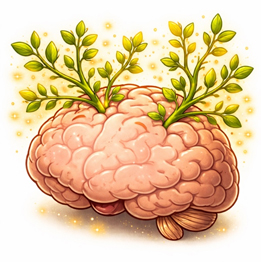
For a long time, scientists assumed that the rules of biology seemed set in stone: once the connections in your brain were broken, they were gone for good. Scientists believed that the central nervous system, which includes your brain and the long connections leading to your eyes, didn’t have the tools to fix its own wiring. However, in a study from Johns Hopkins University using mouse models (more about this later), researchers discovered that the visual system is tougher and more flexible than we imagined, proving the brain has a hidden talent for self-repair.
The visual system is an ideal testing ground for this research. The path from the eye to the brain is like an organized circuit board, and we understand it pretty well. Because it is so well-mapped, scientists can use it to see exactly where connections are broken and where they might be growing back. By understanding how these eye-to-brain connections heal, scientists can learn how to treat all kinds of brain injuries. As it turns out, the brain has a method for getting vision back online, and it starts with something called “sprouting.”
The “Backup Branch” Method (Collateral Sprouting)

Instead of growing brand-new brain cells from scratch, the brain uses a method called Collateral Sprouting. Imagine a large tree that loses half of its branches in a massive storm. To keep the tree healthy and make sure it can still catch sunlight, the surviving branches grow extra-long “backup” shoots to fill in the empty gaps. This is similar to what happens in the brain.
Scientists refer to this growth as “homotypic sprouting.” When some nerve pathways are lost, surviving wires from the eye form new branches to compensate for their neighbors.
Females vs. Males: A Difference in Healing?
When scientists study medicine, they look at both males and females because their bodies can react differently. In this study, they found a surprise: the healing process was not the same for everyone. This is called “Sexual Dimorphism.”
The research showed that while male mice repaired their eye-to-brain connections by Day 14, the female mice were much slower. Even more surprising, the female mice sometimes didn’t finish the repair at all during the study. It’s important to note that while these differences are intriguing, more research will be needed to fully understand these observations.
The three main differences found between males and females were:
- Speed of healing: Males rewired their circuits much faster.
- Total amount of repair: Males reached nearly pre-injury levels, while females often had incomplete repairs.
- Fine details of vision: Males were quicker to regain their “contrast” vision (the ability to see the difference between light and dark), while females struggled with these details for much longer.
Testing the New Wires: Does it Actually Work?
Just because the brain looks fixed under a microscope doesn’t mean it actually works. Scientists had to test if the “vision” signals were moving through the new branches correctly. Scientists could see that the cells were “awake” and they were making sense of the world.
However, while the brain’s “hardware” (the physical wires) grew back fast, the “software” (the timing and strength of the electrical signals) took much longer to update. The “top 10%” of high-power neurons, the ones that handle the most important visual work, were very slow to recover. In females, these high-power signals didn’t return to normal even two months after the injury. This shows that even if the “wires” are replaced, the system takes extra time to “re-learn” how to send high-quality information.
Why This Matters
This research proves that the brain is not a static machine, it is a living, growing system that is actively trying to turn the lights back on after an injury. Because scientists now know more about how the brain rewires itself using these backup branches, they can start looking for new techniques to help this process happen faster.
The study also shows that we can’t treat every brain injury the same way. Since different individuals heal at different speeds, doctors may need to create personalized recovery plans to make sure everyone gets the right help at the right time.
Where is This Information From?
The first source is a professional research paper written by a team of scientists from Johns Hopkins University and other schools. This paper was published in 2025 in The Journal of Neuroscience. The second source is a science news article from ScienceDaily, shared by the Society for Neuroscience.
Science Corner Check-In: Animal Models and Research
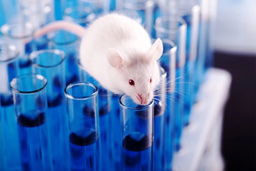
Scientists use animals in research to learn how the human body works and how diseases happen. Studying these animals can help scientists figure out how diseases develop and how new treatments or medicines might work. Even animals that are very different from humans can teach us about basic biology that is the same across many species. Animal experiments are important because they help scientists explore the main questions about how biological systems work. They also help identify possible safety issues and guide researchers in designing better treatments. However, animal studies show possibilities, not guarantees, and must always be followed by careful testing in humans before a treatment is considered proven.
How Should We Think About Animal Studies?
It’s important to remember that animals are not the same as humans. Just because something works in rats or mice doesn’t mean it will work the same way in people. Scientists carefully control things like diet, light, and temperature in the lab, and they try to use as few animals as possible while keeping them safe and comfortable.
Animal studies are often the first step in research, called “preclinical trials.” Scientists use what they learn from animals to decide if a new drug or treatment is safe enough to test in humans. If the animal results are promising, researchers then design clinical trials with people to see if the treatment really works in humans. This careful process is called “translational research.”
References
Alexandris, A. S., Yi, J., Liu, C., Belamarich, J., Alam, Z., Vats, A., Peng, A., Welsbie, D. S., Zack, D. J., & Koliatsos, V. E. (2025). Recovery of retinal terminal fields after traumatic brain injury: evidence of collateral sprouting and sexual dimorphism. The Journal of Neuroscience, Article e0792252025. https://doi.org/10.1523/JNEUROSCI.0792-25.2025
Kim K. H. (2019). How to Interpret the Effects Shown in Animal Study. International neurourology journal, 23(Suppl 1), S1–S2. https://doi.org/10.5213/inj.1920edi.001
National Institutes of Health. (2024, August 16). Why animals are used in research. U.S. Department of Health and Human Services. https://grants.nih.gov/policy-and-compliance/policy-topics/air/why-animals-are-used-in-research#:~:text=Similarities%20to%20laboratory%20animals%20can,improve%20the%20lives%20of%20humans
Society for Neuroscience. (2025, December 19). Neurons aren’t supposed to regrow but these ones brought back vision. ScienceDaily. https://www.sciencedaily.com/releases/2025/12/251219030500.htm
Image
Harvard Gazette. (2023, March 8). Study confirms why we need female mice in neuroscience research. Harvard University. https://news.harvard.edu/gazette/story/2023/03/study-confirms-why-we-need-female-mice-in-neuroscience-research/